One of the most important moments from Six Flags’ earnings call on Feb. 19 didn’t come from a chart, a slide, or a headline number.
It came from a sentence.
CFO Brian Witherow described the decision to cancel holiday 2025 events as a “self-inflicted headwind” for attendance and operating leverage—and that phrasing is doing a lot of work. It’s not just an admission that a programming choice hurt turnout. It’s an operating lesson about how regional parks actually make money when the calendar turns and the weather changes.
Because seasonal events—especially winter holiday offerings—aren’t just entertainment. They’re demand drivers.
Seasonal events aren’t “extra.” They’re the engine.
For years, operators treated holiday programming like a bonus: a festive add-on, a marketing perk, something you could dial up or dial down depending on budgets.
But in 2026, that framing feels outdated.
A strong seasonal event doesn’t simply attract guests. It reshapes the entire revenue model. It gives the park a reason to be open. It creates urgency. It helps sell season passes earlier. It pushes add-ons. It turns “off-season” into “shoulder season.” And critically, it influences guest behavior in ways that flow through everything else—food, beverage, merchandise, in-park spending, and even how people perceive the brand.
When you remove that demand driver, you don’t just lose event attendance. You often lose the ripple effects that would have come with it.
The leverage problem: fixed costs don’t care about your calendar
The phrase “operating leverage” matters here because parks don’t operate like a typical retail business where you can simply trim hours and call it a day.
Theme parks carry big fixed costs: maintenance, utilities, security, management staffing, marketing commitments, and the baseline labor required to open gates and run a safe operation. Those costs don’t shrink proportionally just because you have fewer high-demand days.
That’s why canceling a seasonal event can be a double hit:
- fewer guests show up
- the cost structure doesn’t fall fast enough to protect margins
In other words, you’re not just down attendance—you’re down efficiency. And when attendance slides, the financial pain isn’t linear. It compounds.
The real takeaway: the goal isn’t “more events.” It’s smarter events.
This is where Six Flags’ stated direction for 2026 is worth watching: rethinking winter holidays with a tighter, returns-driven approach, market by market.
That’s the right frame.
Because the strategy isn’t “do a holiday event at every park” or “go big everywhere.” That’s how you end up with uneven outcomes, diluted marketing, and events that look good on a calendar but don’t produce meaningful incremental demand.
The smarter play is targeted programming:
- build the right event for the right climate
- fit it to the right local competition set
- align it with staffing realities
- price it to protect yield, not just volume
- market it as a must-do experience, not a generic seasonal overlay
A well-designed seasonal event should answer a very specific business question: Does this create incremental visits and incremental spend that wouldn’t happen otherwise?
If the answer is yes, it’s not just entertainment—it’s strategy.
Why this matters beyond one quarter
It’s easy to treat the “self-inflicted headwind” comment as a one-off explanation for a soft spot in performance.
It’s bigger than that.
Regional operators are learning—sometimes the hard way—that the calendar is part of the product. Guests don’t simply buy access to rides. They buy reasons to go now. And in a world where families are juggling budgets, schedules, weather, and competing options, the parks that win are the ones that manufacture momentum.
Holiday events do that when they’re executed well.
So if 2025 taught Six Flags anything, it’s this: seasonal programming isn’t optional filler. It’s one of the most controllable levers the business has.
And in 2026, the best version of that lever won’t be “more.” It’ll be “right-sized, market-smart, and built to drive measurable demand.”
That’s not just a programming decision.
That’s the operating strategy.
Find and follow me on Facebook, X, Instagram, and YouTube for more coverage of theme parks, travel, and roadside attractions. Subscribe to Theme Parks By Don – It’s free!
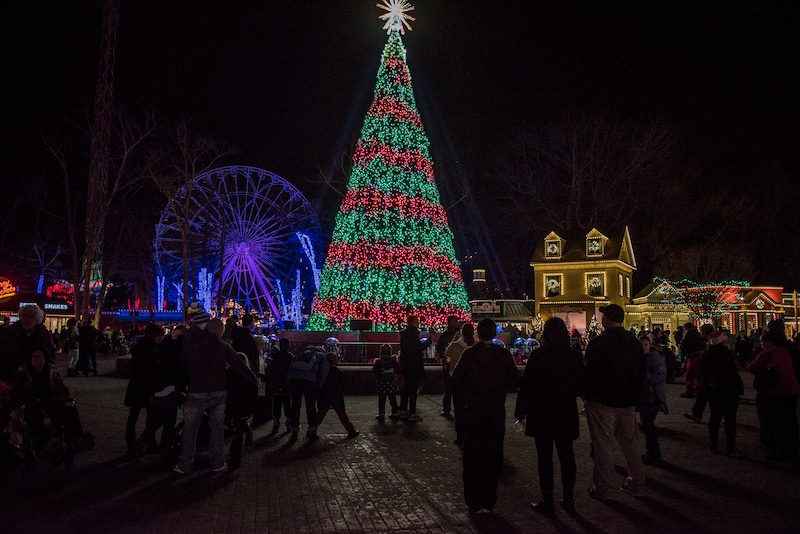
(Photo Six Flags Great Adventure)

Leave a Reply