For roller coaster enthusiasts, preserving the past is just as important as chasing the next record-breaking thrill. And now, a major piece of that history has been brought back to life.
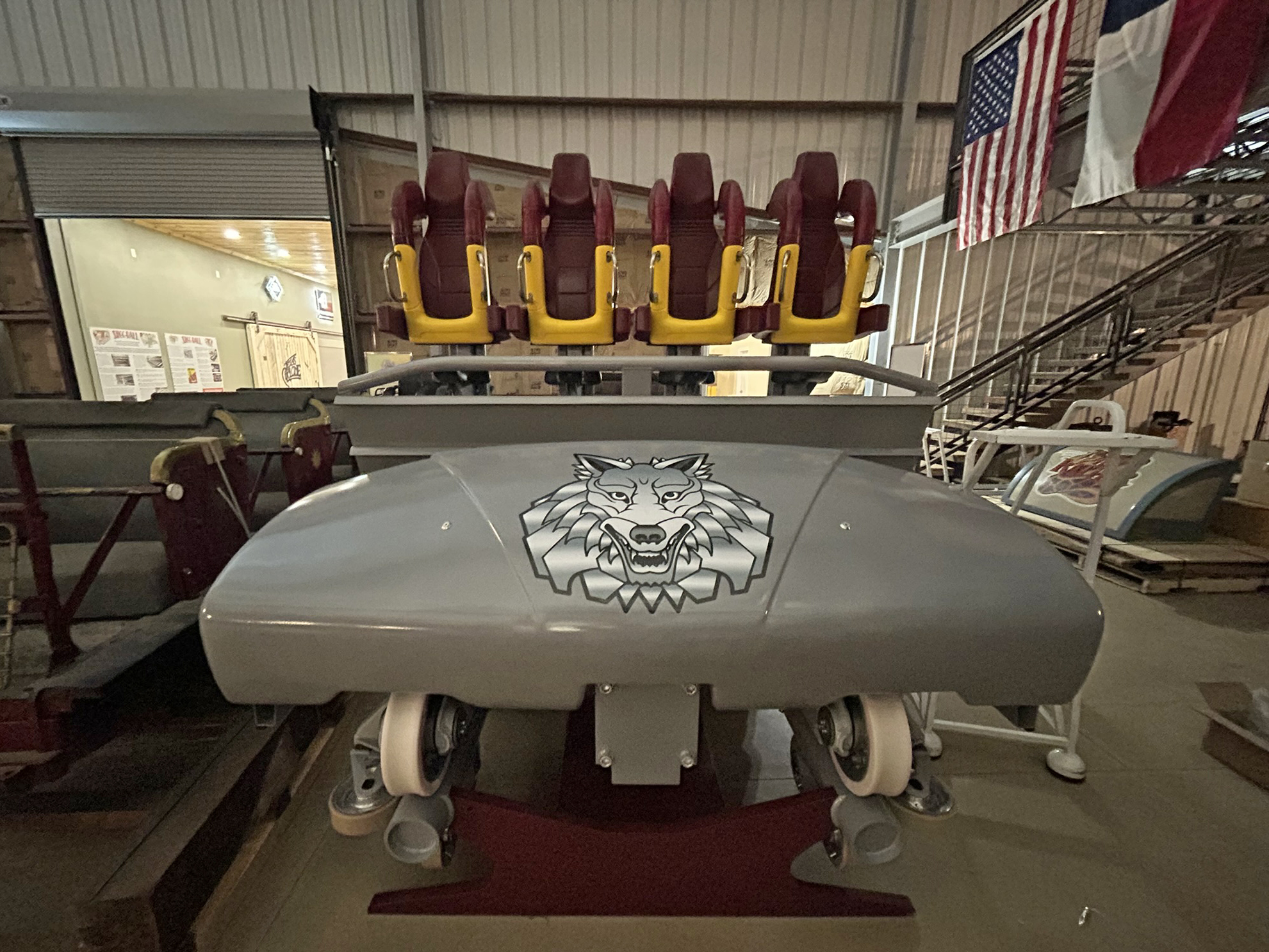
The National Roller Coaster Museum and Archives (NRCMA) has completed a retro-restoration of the lead vehicle from Iron Wolf, the groundbreaking stand-up roller coaster that helped launch the legacy of Bolliger & Mabillard—one of the most influential ride manufacturers in the world.
Restoring a First-of-Its-Kind Ride
Debuting in 1990 at Six Flags Great America, Iron Wolf wasn’t just another coaster—it was a statement. As the first standalone design from Walter Bolliger and Claude Mabillard, the ride introduced a bold concept: riders standing rather than sitting, secured by innovative restraints designed to adjust to height.
That concept helped redefine what a roller coaster could be at the time.
Now, more than three decades later, the NRCMA has returned the ride vehicle to its original 1990s appearance. Thanks to funding from two anonymous contributors, the train once again features its original logo, color scheme, and even its distinctive restraint design—details that longtime fans will instantly recognize.
“This restoration allows the museum to show how the ride type and B&M evolved over time,” said NRCMA President Pete Owens, highlighting the project’s role in connecting today’s fans with the industry’s innovation roots.
From Record Breaker to Relic—and Back Again

Iron Wolf’s story didn’t end in Illinois. In 2012, the coaster was relocated to Six Flags America and renamed Apocalypse before undergoing another transformation in 2014, when its trains were converted to a floorless design.
But for purists, the original stand-up configuration represents a defining era in coaster design—and that’s exactly what the NRCMA has chosen to preserve.
The restored vehicle now serves as a tangible reminder of a time when experimentation and bold engineering pushed the boundaries of thrill rides.
A Museum Built by Fans, for Fans
The Iron Wolf train is just one piece of a much larger mission.
The NRCMA is currently developing a 20,000-square-foot facility dedicated to preserving the history of roller coasters and amusement parks. Through artifacts like restored ride vehicles, signage, and mechanical components, the museum aims to document an industry that continues to evolve at a rapid pace.
Fans wanting to see the Iron Wolf vehicle in person will have that opportunity during upcoming construction preview events, scheduled throughout the year. Registration is now open through the museum’s official website.
As a nonprofit organization, the NRCMA relies heavily on the support of enthusiasts, parks, and industry partners to bring projects like this to life. Contributions help fund not only restorations, but also the continued build-out of the museum’s future home.
Why the Iron Wolf Still Matters Today

In an era where new attractions dominate headlines, projects like this serve as an important reminder: today’s innovations are built on yesterday’s risks.
Iron Wolf may no longer stand on a midway, but its impact still echoes through the industry—from the evolution of stand-up coasters to the global influence of Bolliger & Mabillard.
And thanks to this restoration, a new generation of fans will be able to see exactly where that story began.
Find and follow me on Facebook, X, Instagram, and YouTube for more coverage of theme parks, travel, and roadside attractions. Subscribe to Theme Parks By Don – It’s free!
(Photos courtesy National Roller Coaster Museum and Archives)
Leave a Reply