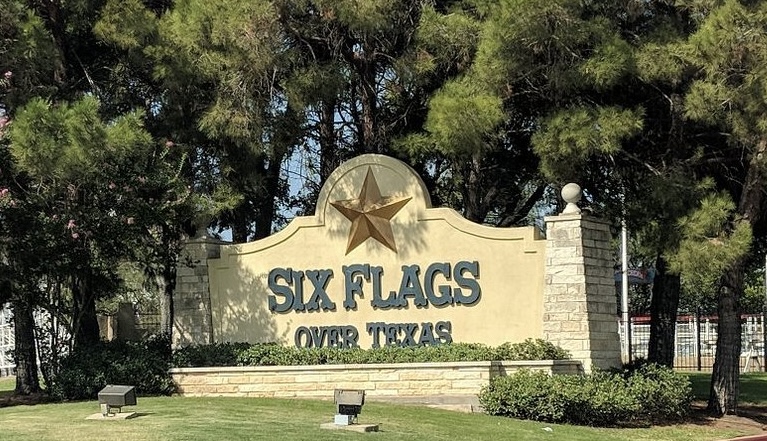
When Six Flags Entertainment talks about the future of its portfolio, the subtext increasingly points back to where it all began: Texas.
And more specifically, to Six Flags Over Texas.
The original park isn’t just a legacy asset. It’s becoming a strategic centerpiece.
Why Six Flags Over Texas Matters More Than Ever
The Dallas–Fort Worth metroplex is one of the fastest-growing population centers in the United States, and that growth shows up in the fundamentals that matter most to a regional operator. A massive local population base gives Six Flags a deep well of repeat visitation to build around, not just one-off trips.
Arlington’s position inside a major sports and entertainment corridor adds another layer of demand. The area pulls in visitors for games, concerts, and events, creating steady tourism spillover that can turn a park day into part of a bigger weekend.
Then there’s the calendar. Texas gives Six Flags more flexibility to operate, market, and program across a longer season than many northern parks can realistically sustain. More viable operating days, combined with a more forgiving weather window, means more chances to monetize visits and justify investment.
Put it all together and Six Flags Over Texas isn’t just big — it has both the scale to matter and the runway to keep growing.
The Home Market Advantage
Six Flags Over Texas isn’t just another regional park. It’s the brand’s origin story, and that matters when a company is trying to define its next chapter—especially coming out of integration and restructuring. Strengthening the park that carries the company’s name has symbolic value, but the more important point is what it enables operationally.
Arlington has evolved into an entertainment hub with built-in demand drivers sitting minutes away. The Texas Rangers at Globe Life Field and the Dallas Cowboys at AT&T Stadium aren’t just neighbors; they’re anchors in a destination district that also hosts major concerts and national events. That kind of surrounding draw changes the visitation math.
When a park sits inside a broader weekend ecosystem, it naturally benefits from multi-day trip behavior. It’s easier to justify hotel growth, easier to drive cross-traffic, and easier to build packages that feel additive instead of standalone. Many regional parks have to manufacture that ecosystem through marketing. Arlington already has it.
If you’re deploying capital where it can create measurable incremental demand, this is exactly the type of market that rises to the top.
Capital Discipline Favors Flagship Markets
Six Flags leadership has repeatedly emphasized a tighter, returns-driven approach to capital allocation. The takeaway is straightforward: fewer projects that exist mainly to make headlines, and more investment that is designed to move measurable demand, spending, and operating performance.
Six Flags Over Texas fits that filter unusually well. It has the kind of established infrastructure that allows new additions to plug in quickly without needing a complete rebuild of the underlying guest experience. It also has a high attendance ceiling, driven by the scale of the market and the park’s role inside a larger entertainment corridor. Add in a large passholder base, and you’re looking at an audience that will respond to programming changes and repeat-visit incentives.
Just as important, the park has clear upside in areas that tend to deliver high-margin returns, particularly food and beverage and add-on spending. And because the company’s leadership footprint is closely tied to the region, there’s a proximity advantage that tends to accelerate focus, attention, and execution.
When attendance growth is increasingly driven by programming, seasonal events, and a handful of high-impact additions—rather than simply owning more parks—operators have to prioritize properties that can absorb those improvements and monetize them efficiently. Six Flags Over Texas is built for exactly that kind of strategy.
Weather, Calendar & Operating Leverage
Weather isn’t a small variable in this business. It’s a revenue driver. The climate you operate in determines how many days you can realistically be open, how confidently you can plan event programming, and how often guests will choose a park as a default weekend option instead of a special occasion.
Northern parks fight compressed calendars and unpredictable shoulder seasons. Texas doesn’t face that same constraint. Six Flags Over Texas can extend event programming deeper into the fall and start it earlier in the spring with less operational risk, which changes the economics of the calendar. In a model where seasonal events have repeatedly shown they aren’t optional “extras” but real demand drivers, that flexibility matters.
A longer operating window isn’t just about more open days on a schedule. It increases passholder usage because there are more viable weekends to visit. It creates more opportunities to capture in-park spending on food, beverage, and add-ons. It improves fixed-cost absorption because labor, utilities, and operating systems are being spread across more revenue-producing days. And it strengthens operating leverage by letting the park convert incremental attendance into higher profitability.
If the goal is more stable, more predictable EBITDA, climate becomes part of the investment thesis—not a footnote.
What This Signals About Six Flags’ Portfolio Strategy
This isn’t about abandoning other markets. It’s about prioritization.
Post-merger Six Flags now manages one of the largest regional portfolios in North America. The days of evenly distributed capex are likely over. Expect more tiered strategy:
Tier 1: Flagship, growth-market parks
Tier 2: Stable regional earners
Tier 3: Market-specific operators
Six Flags Over Texas clearly sits in Tier 1.
The Brand Narrative Play
There’s another layer here.
Reinvesting heavily in Six Flags Over Texas reinforces the company’s identity at a time when brand clarity matters. It anchors the narrative. It signals confidence. It reminds Wall Street—and guests—where the story started.
When you’re tightening strategy and sharpening focus, doubling down on your namesake park sends a message.
The Bigger Picture
Putting “a lot of eggs in the Six Flags Over Texas basket” isn’t a gamble. It’s a concentration strategy.
In today’s regional park landscape, success isn’t about how many parks you operate. It’s about how effectively you deploy capital into markets that can scale attendance, drive per-capita spending, and support year-round programming.
Six Flags Over Texas has population density, tourism adjacency, climate advantage, and brand equity.
That combination is hard to replicate.
If Six Flags is serious about sustainable growth and margin expansion, Arlington isn’t just a sentimental choice.
It’s a strategic one.
Find and follow me on Facebook, X, Instagram, and YouTube for more coverage of theme parks, travel, and roadside attractions. Subscribe to Theme Parks By Don – It’s free!
Leave a Reply