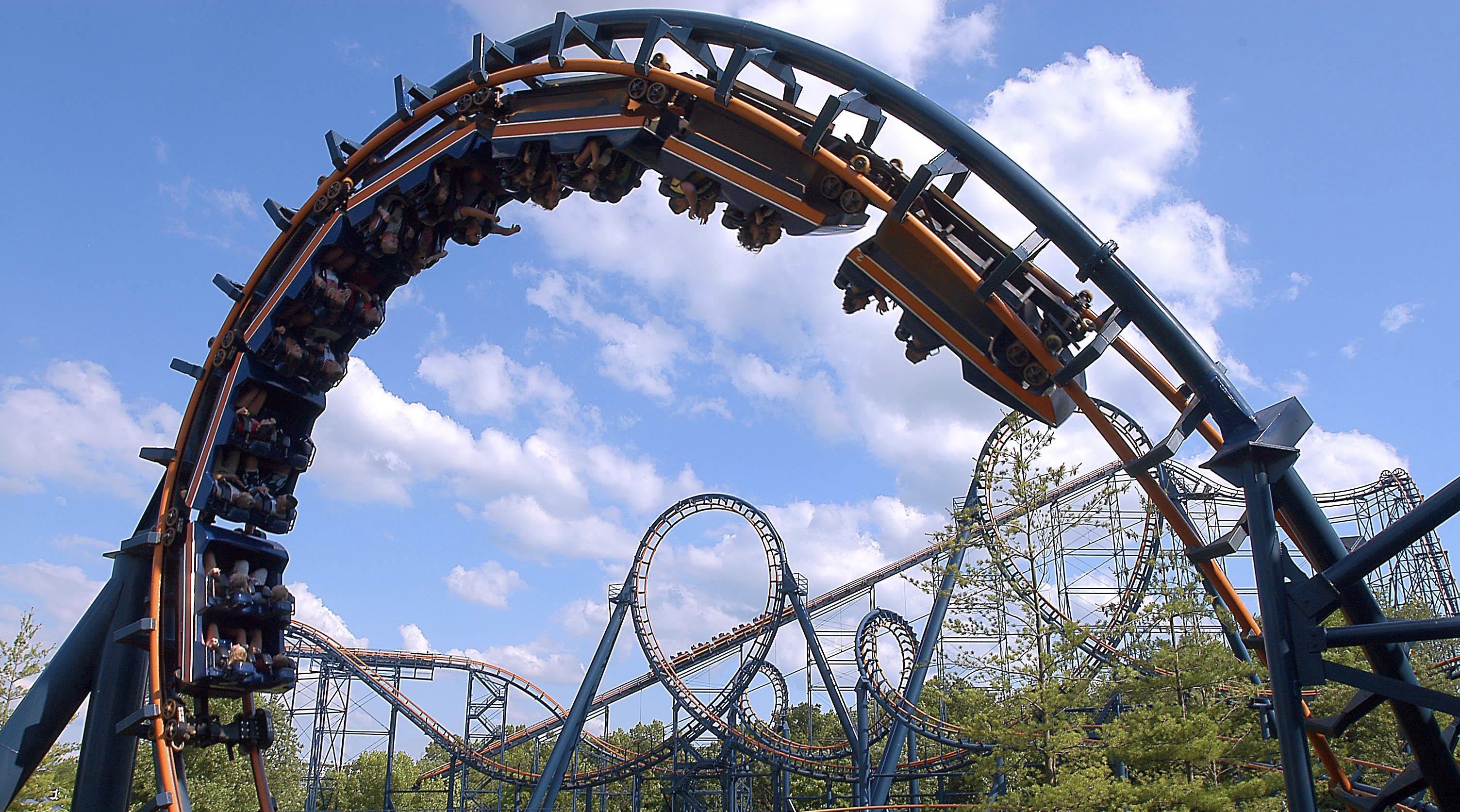
Seven years after Vortex ran its final rides at Kings Island on Oct. 27, 2019, the phrase “Vortex replacement” may have outlived its usefulness. What once felt like a placeholder for an imminent successor at the Mason, Ohio, amusement park now reads more like fan shorthand—useful, but increasingly inaccurate.
Calling a future attraction a “replacement” implies obligation and equivalence: same role, same footprint, same emotional payoff. But enough time has passed that whatever eventually rises on that plot won’t be filling a vacancy—it’ll be making its own statement. New coaster, flat ride, multi-attraction package, or something entirely unexpected, the project will stand on its own merits.
That’s why many fans and observers should shift their language to terms like “the former Vortex site” or “the Vortex plot.” It’s cleaner, more precise, and avoids setting expectations Kings Island never promised to meet.
Vortex’s legacy isn’t diminished by retiring the label. If anything, it signals closure—and makes room for whatever comes next to be judged not as a replacement, but as a brand-new chapter.
At its debut in 1987, The Vortex was unlike anything the amusement industry had seen. Rising 148 feet, it became the world’s tallest full-circuit roller coaster at the time—and the first to deliver six inversions in one ride. Riders plunged down a 138-foot drop, ripped through loops and corkscrews, and hit speeds up to 55 miles per hour in a layout that felt equal parts ambitious and intimidating.
That kind of legacy is exactly why the phrase “Vortex replacement” stuck for so long—even if the next addition on that site deserves a name, and a narrative, of its own.
Find and follow me on Facebook, X, Instagram, and YouTube for more coverage of theme parks, travel, and roadside attractions. Subscribe to Theme Parks By Don – It’s free!
Leave a Reply