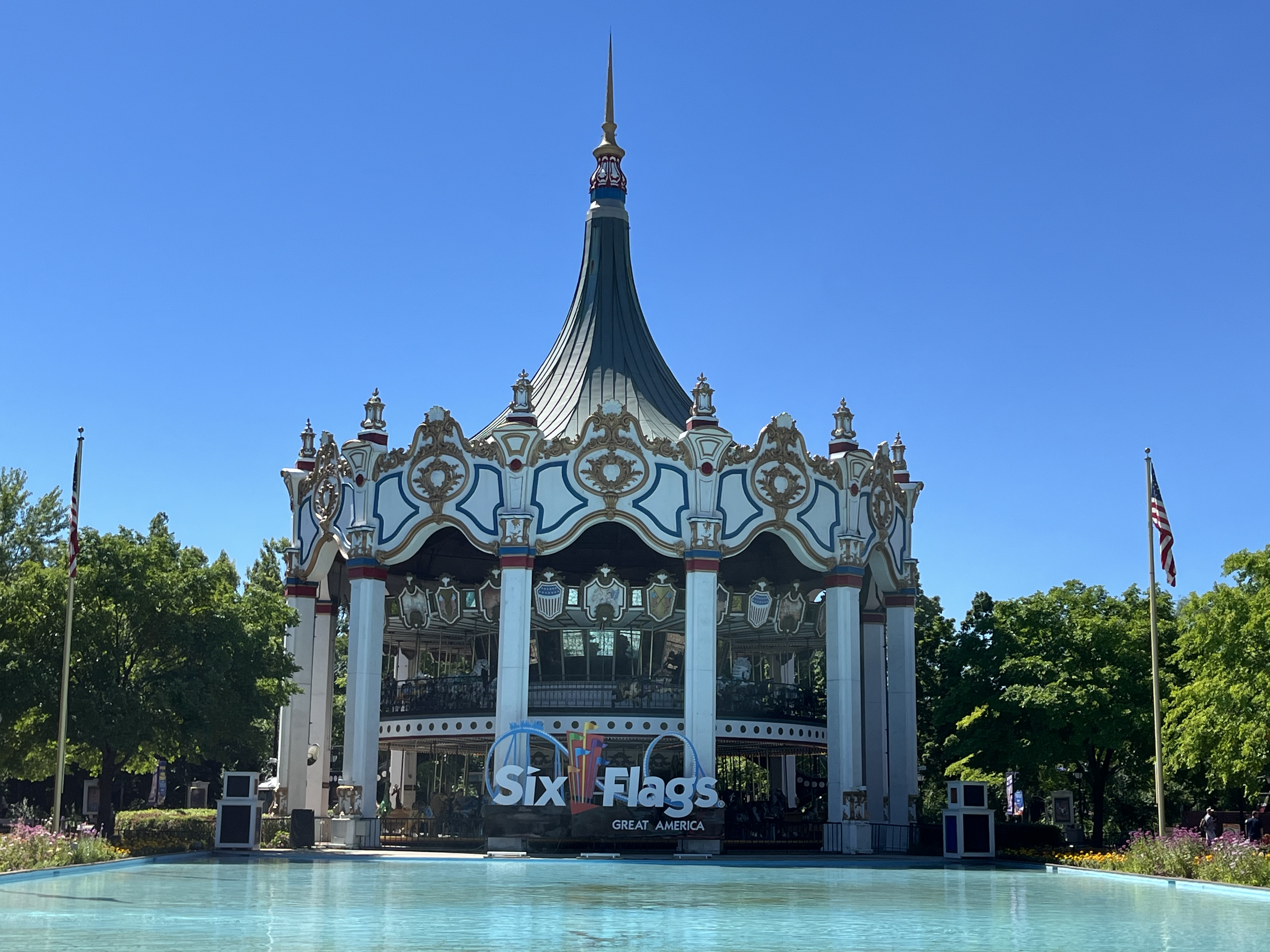
For years, the regional theme park business has been defined by a familiar cycle: build a major new roller coaster, generate headlines, drive attendance spikes, then repeat the process a few years later. But Six Flags Entertainment’s first quarter 2026 results suggest the company is increasingly focused on something far more sustainable — creating a more stable, year-round business model built around guest spending, operational discipline, and stronger long-term engagement.
The numbers themselves tell part of the story. Six Flags reported first-quarter revenue of $225.6 million, up 12 percent year-over-year, while attendance climbed 4 percent to 2.9 million visits despite fewer operating days. Even more important, guest spending continued to rise, with per capita spending increasing 6 percent to $69.26. Food, beverage, merchandise, and premium products all contributed to the gains.
That matters because the modern theme park business is no longer solely dependent on attendance growth. The real competitive battleground increasingly centers on how effectively operators monetize each visit while improving the overall guest experience.
Operational Discipline Is Becoming the New Competitive Advantage

What stands out most from Six Flags’ latest performance is how much of the improvement came from operational execution rather than headline-grabbing capital investment. The company reduced operating costs by more than $50 million while simultaneously increasing guest spending. Maintenance expenses, full-time wages, and operating supplies were all reduced as management emphasized efficiency across the merged Six Flags and Cedar Fair portfolio.
For theme park operators, that balancing act is difficult. Cutting costs too aggressively risks damaging the guest experience, especially in a business where satisfaction drives season pass renewals and repeat visitation. Yet Six Flags appears determined to prove that operational discipline and guest satisfaction are not mutually exclusive.
Food and Beverage Have Become Strategic Growth Drivers

The company’s growing emphasis on food and beverage is especially telling. In-park per capita spending increased 10 percent, driven largely by higher spending on food, beverage, and merchandise. Across the industry, parks are realizing that guests increasingly view theme parks as lifestyle entertainment destinations rather than simply collections of rides. Dining festivals, seasonal culinary events, premium lounges, and upgraded menus are becoming central revenue drivers.
That strategy is already visible throughout the Six Flags chain. Parks across the portfolio have leaned harder into immersive seasonal events, specialty food festivals, and expanded entertainment offerings designed to keep guests in the park longer and spending more while there.
Regional Passes Are Reshaping Guest Behavior

The expanded regional season pass strategy may be even more important long term. Six Flags noted encouraging early response to broader park access offerings and enhanced membership benefits. That reflects a major philosophical shift in how regional amusement parks are positioning themselves.
Historically, many regional parks operated as single-destination attractions. Today, the industry increasingly resembles a networked entertainment ecosystem. A guest purchasing a gold season pass at Kings Island can now view parks like Cedar Point or Canada’s Wonderland as part of a single vacation portfolio rather than separate competitors.
That approach mirrors strategies already common in airlines, cruise lines, and hospitality, where loyalty ecosystems drive repeat consumer behavior across multiple destinations.
Leadership Changes Reveal the Company’s Direction

The leadership changes announced alongside earnings further reinforce where Six Flags believes its future lies. Bringing in a chief marketing officer from the cruise industry and hospitality sector is particularly significant. Cruise lines and hotel brands excel at data-driven guest segmentation, loyalty cultivation, and maximizing lifetime customer value. Those are precisely the areas Six Flags now appears intent on strengthening.
The appointment of Amy Martin Ziegenfuss from the cruise and hotel industries signals that Six Flags increasingly sees itself competing not only against other amusement parks, but against the broader leisure and travel industry for consumers’ discretionary spending.
That distinction matters.
Families planning vacations today weigh amusement parks against cruises, all-inclusive resorts, sports travel, concerts, and experiential entertainment. The companies that win will be those that create stronger emotional engagement while making repeat visitation feel seamless and valuable.
Debt, Weather and Economic Pressure Still Loom

At the same time, Six Flags still faces substantial challenges. The company continues carrying more than $5 billion in net debt, and the first quarter still produced a net loss approaching $269 million. Weather volatility, fuel prices, economic uncertainty, and promotional pressure remain real risks heading into the critical summer operating season.
The calendar itself also exposed an important lesson. Six Flags acknowledged that removing several winter holiday events last year contributed to fewer operating days and pressured attendance comparisons. That reinforces a broader reality within the industry: seasonal events are no longer optional add-ons. They have become essential attendance drivers that help parks maximize infrastructure investments beyond traditional summer months.
Six Flags Is Trying to Redefine the Regional Park Model

In many ways, Six Flags’ first quarter results reveal a company trying to evolve from a coaster-centric operator into a more sophisticated experiential entertainment business.
The rides will always matter. They remain the emotional centerpiece of the amusement park industry. But increasingly, long-term success may depend less on who builds the tallest roller coaster and more on who creates the strongest ecosystem around the guest experience — one that blends entertainment, dining, loyalty programs, technology, and operational consistency into a compelling reason to keep coming back.
The real story in Six Flags’ early 2026 performance may not be the attendance growth or higher spending. It may be the company’s attempt to fundamentally redefine what a regional amusement park operator looks like in the modern leisure economy.
Find and follow me on Facebook, X, Instagram, and YouTube for more coverage of theme parks, travel, and roadside attractions. Subscribe to Theme Parks By Don – It’s free!


Leave a Reply